Our team will meet you in the lobby of your hotel in Marsa Alam Port Ghalib. You will travel through the desert and the Nile Valley in an air-conditioned vehicle. In the Nile Valley you can see the farmers' fields and their houses.
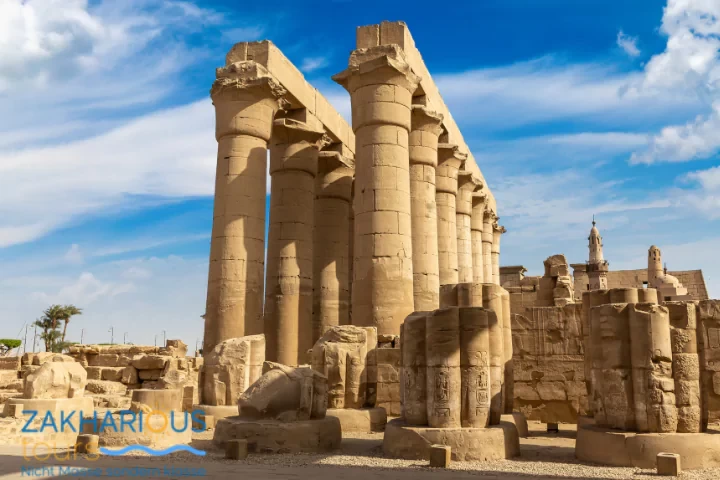
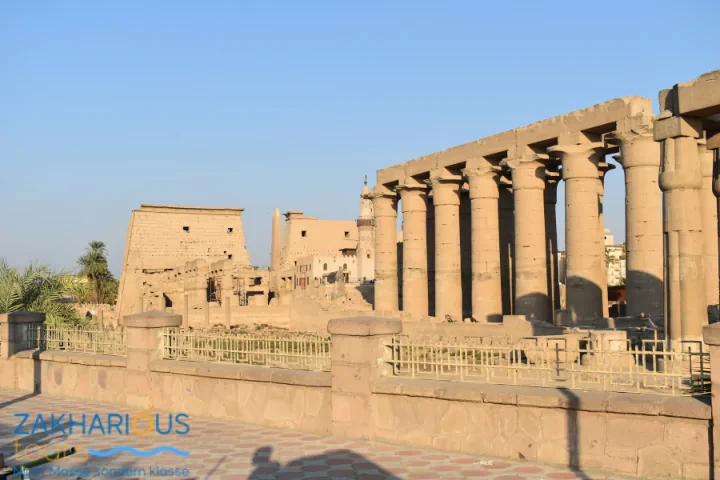
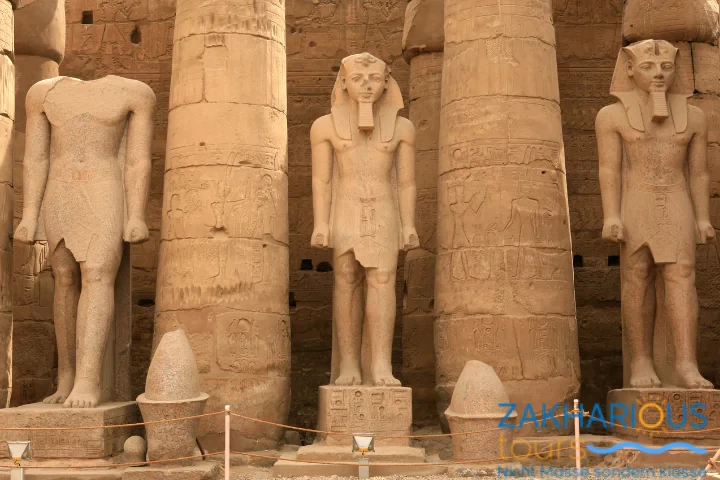
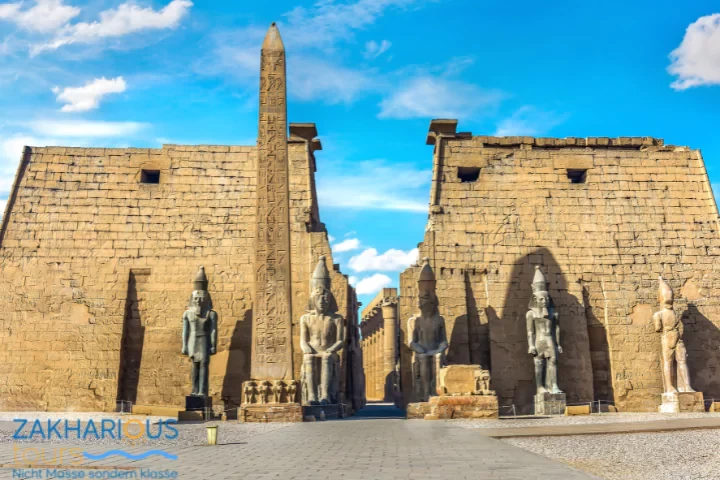
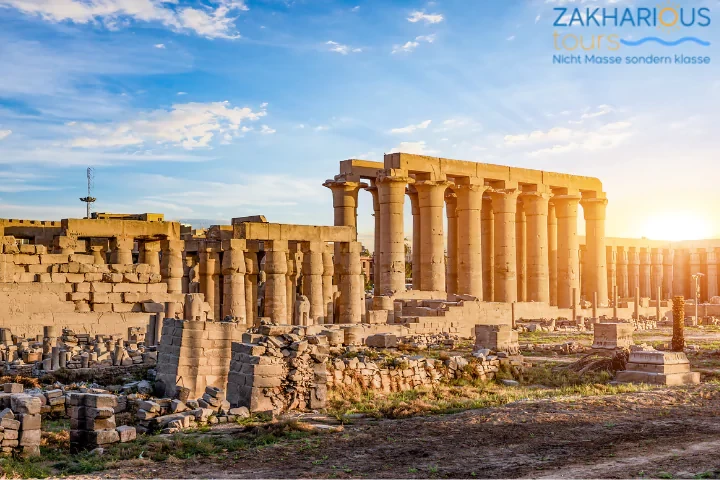
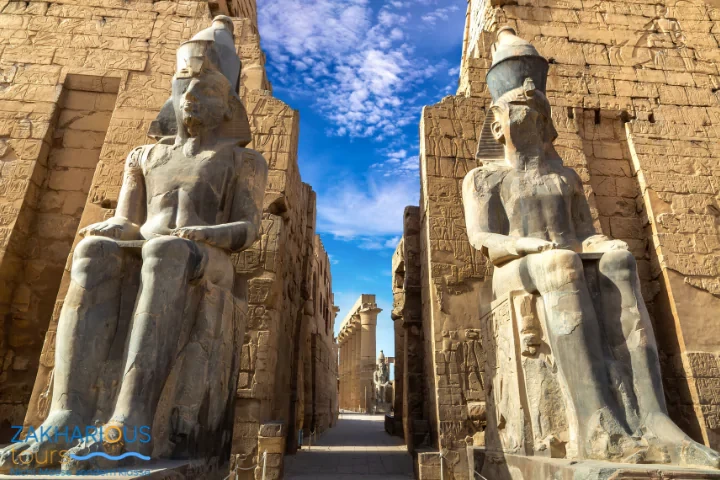
Once in Luxor, you will visit the Luxor Temple, which was built during the New Kingdom period and has been on UNESCO's World Heritage List since 1979. The temple was dedicated to the god Amun, his wife Mut and their son Chons and was built in several sections. Construction began in the 12th Dynasty, and the last renovation was carried out by Alexander the Great, who integrated the temple complex into a fortress.
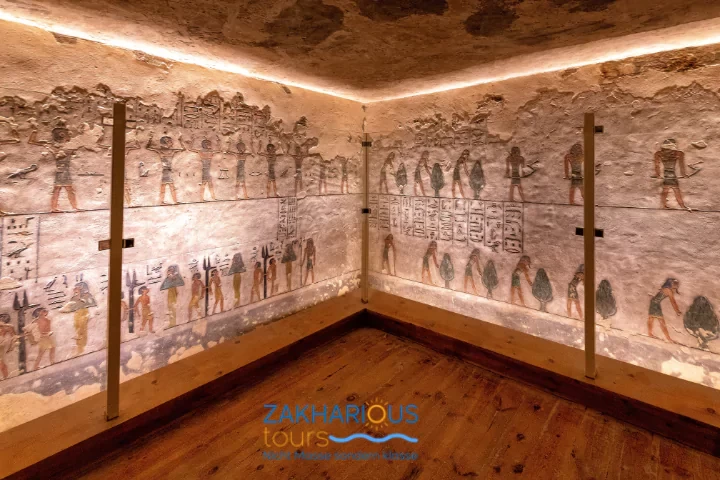
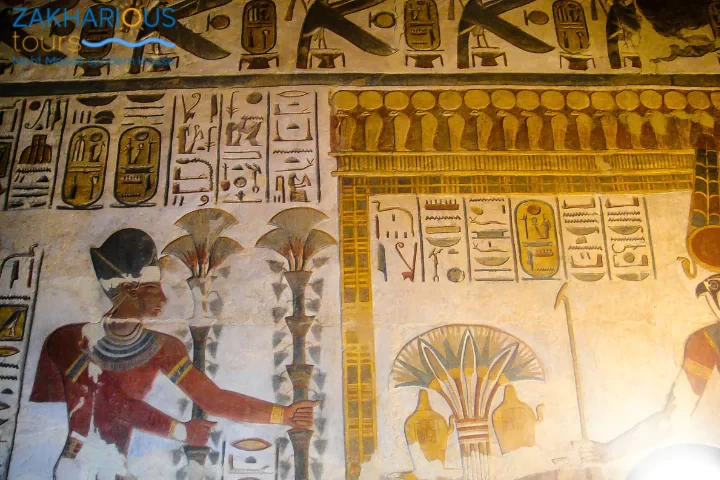
We then go to the Valley of the Queens, but this name is misleading. In addition to the queens, relatives of the rulers of the late 17th to 20th dynasties were buried in the Valley of the Queens. The most important tombs are those of Nefertari and the wife of Ramses II. You can visit two tombs from the inside and, depending on accessibility, a third. The Tomb of Nefertari is occasionally accessible and can be visited optionally at an additional cost.
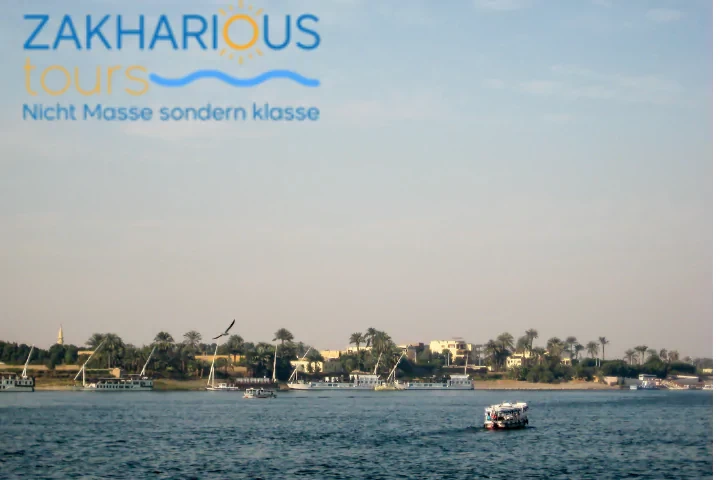
At lunchtime, enjoy a traditional Egyptian lunch on a motorboat.
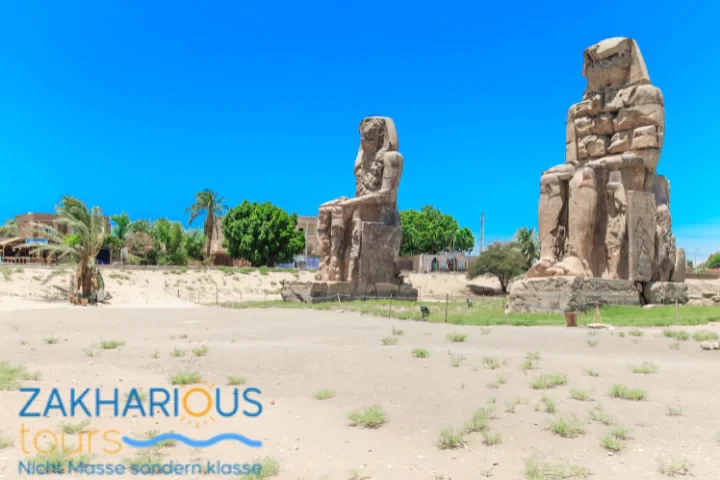
On your journey to the Howard Carter Museum, stop at the Colossi of Memnon, which once stood in front of the pylons at the entrance to the temple of Amenhotep III, an 18th Dynasty pharaoh. The statues are badly damaged and represent Amenhotep III. who sits on the throne.
Located on the West Bank of Luxor, the Howard Carter Museum is dedicated to the life and discoveries of the British archaeologist who discovered the tomb of Tutankhamun in the Valley of the Kings in 1922. You will gain personal insights into the life and work of Howard Carter and experience the discovery of this iconic grave from a completely new perspective.
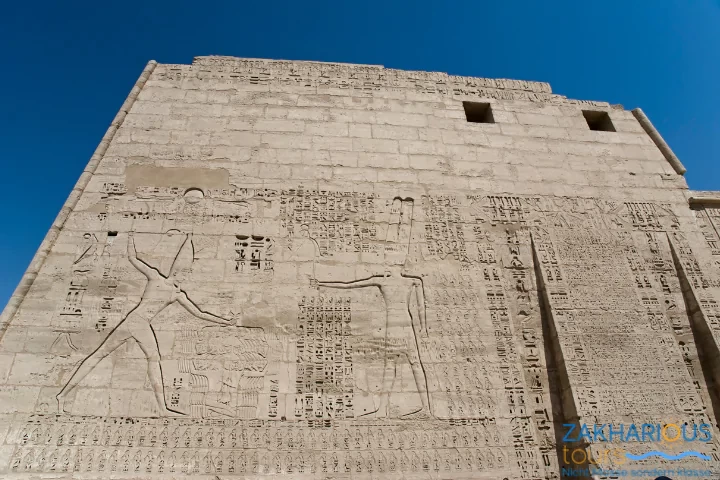
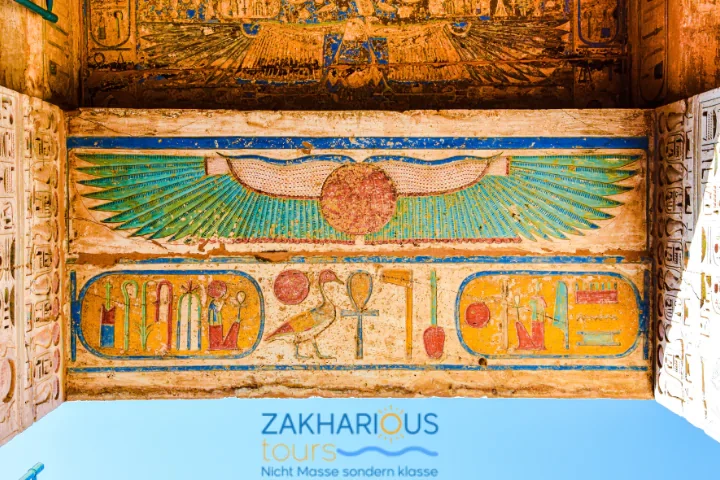
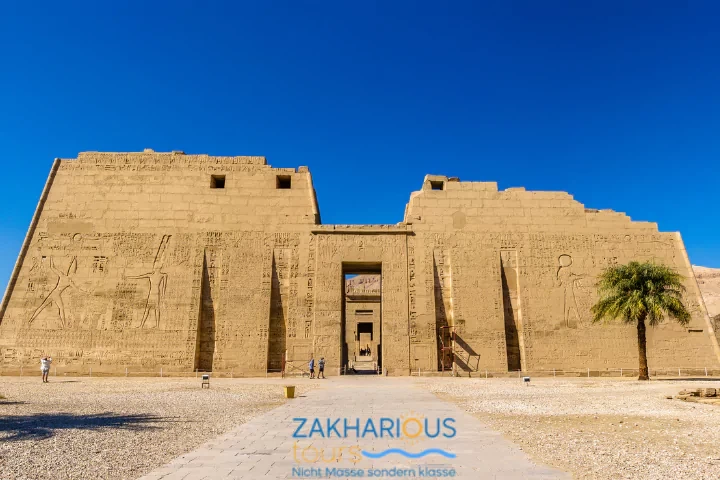
At the end of your excursion you will visit Medinat Habu. Medinat Habu is a temple complex that included the mortuary temple of Ramses III, the Temple of Amun, the funerary chapels of the God's Wives of Amun from the 23rd to 26th dynasties and the Sacred Lake. The main temple is well preserved and is known, among other things, for its relief depictions of the victory of Ramesses III. about the Sea Peoples at the beginning of the 12th century BC.
After this day full of new impressions and discoveries, we will take you back to your hotel.
Write Your Own Review